The Passive Skill Tree in Path of Exile is one of the game’s defining features, offering unparalleled flexibility and freedom for players to customize their characters. Unlike many other RPGs, where your character’s abilities and stats are fixed, Path of Exile allows you to create almost any type of build you can imagine.
This encourages creativity and experimentation, allowing players to explore countless combinations of nodes, passives, and gear to create a truly personalized character. In this article, we’ll explore how the Passive Skill Tree fosters creativity and experimentation and why it remains one of the most exciting aspects of Path of Exile’s gameplay.
The Complexity and Depth of the Passive Skill Tree
The Passive Skill Tree is massive, with thousands of nodes that affect your character’s stats, abilities, and resistances. What sets it apart from other RPG systems is the sheer number of ways players can approach it. While some players might focus on maximizing damage output, others may prioritize survivability, defenses, or mobility. There are no set paths, and players are free to make the tree their own by selecting nodes that complement their playstyle, goals, and the skill gems they use.

The versatility of the tree means that no two characters are ever exactly the same. Even if two players are using the same class, they can still build vastly different characters by choosing different routes through the Passive Skill Tree. This encourages experimentation and creativity, as players are able to constantly try new combinations of nodes, respec to refine their builds, and discover new ways to approach combat and progression.
- Endless Customization: The Passive Skill Tree allows players to create a character tailored to their exact playstyle, with virtually endless combinations of nodes and passives.
- Unique Builds: No two builds are ever the same, even if players are using the same class, leading to an incredibly diverse experience.
- Experimental Paths: The tree’s open structure invites experimentation, where players can try new ideas and constantly refine their builds over time.
Choosing Your Path: Damage, Defenses, and More
When starting a new character, players are immediately faced with the decision of how to allocate their skill points on the Passive Skill Tree. Some will prioritize raw damage, seeking out nodes that increase elemental, physical, or spell damage. Others might choose to focus on defense, picking up nodes that provide increased life, energy shield, or resistances. Many players will strike a balance between offense and defense, carefully selecting nodes that increase both their damage output and their survivability.
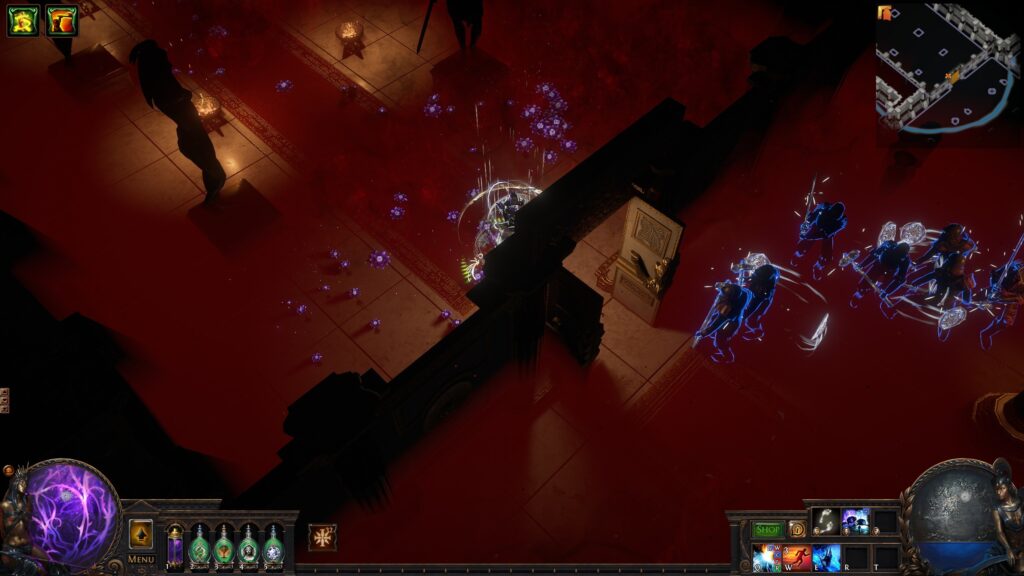
This balance is one of the core aspects of experimentation in Path of Exile. Players can constantly try new paths through the Passive Skill Tree, adjusting their build as they learn more about the game’s mechanics. For example, a player might start with a build focused on damage, only to realize that they need more survivability to handle tougher content. They can then respec and allocate points into defensive nodes to create a more well-rounded build, experimenting with different combinations until they find the optimal setup.
Synergies with Skill Gems and Gear
While the Passive Skill Tree offers incredible flexibility, it is the synergy with skill gems and gear that truly makes Path of Exile’s character building system so dynamic. The skill gems you choose to socket into your gear play a huge role in determining your character’s playstyle. Whether you are using elemental spells, summoning minions, or wielding a massive two-handed weapon, the skill gems you select interact with the nodes on the Passive Skill Tree to create unique effects and bonuses.
For example, if you are building a *Flameblast* spellcaster, you’ll likely choose nodes that increase spell damage, critical strike chance, and area-of-effect. You might also look for gear that increases your fire damage or spellcasting speed to further enhance your build. Alternatively, if you are using minion-based skills, you’ll focus on nodes that boost minion life, damage, and resistance. The passive tree encourages players to think carefully about how their choice of skill gems and gear can maximize their build’s potential.
Respeccing and Iterating on Your Build
One of the most appealing aspects of the Passive Skill Tree is the ability to respec, or refund skill points, allowing you to experiment and adjust your build as you progress. Path of Exile offers multiple ways to respec your character, such as using *Orbs of Regret* or completing certain quests that grant skill point refunds. This flexibility allows players to try out different paths through the tree, making changes as they gain new gear, try different skill gems, or change their playstyle.

Respeccing also makes it easier for players to adapt to changes in the game’s balance. With each new league or patch, certain builds may become stronger or weaker depending on changes to the game’s mechanics or skill gems. Players can quickly respec and optimize their builds to take advantage of these changes, ensuring that they always have a build that is viable and powerful. This ability to continually evolve your character makes Path of Exile’s Passive Skill Tree an incredibly engaging system, encouraging players to experiment and adapt throughout their journey.
Building for the Endgame
The Passive Skill Tree is designed not just for leveling up but for long-term endgame progression. Once players reach the endgame content, such as the *Atlas of Worlds* and *Uber Bosses*, they need to have a character that is both powerful and specialized. This requires careful planning and decision-making when allocating skill points in the tree, as players need to ensure that their build is optimized for the most difficult content.
Endgame builds often require specific nodes that enhance your survivability, damage output, or other key aspects of your character’s performance. For example, when preparing for a tough fight against a boss like *Uber Elder*, players might want to focus on nodes that increase their critical strike damage, elemental resistances, or life leech. These endgame optimizations are a direct result of the flexibility offered by the Passive Skill Tree, giving players the freedom to tailor their build specifically for the challenges they face at the highest levels of the game.
Conclusion: The Creative Freedom of the Passive Skill Tree
The Passive Skill Tree is one of the most creative and engaging aspects of Path of Exile. Its complexity and depth allow players to experiment with countless build possibilities, leading to endless customization and variation. Whether you’re crafting a build for farming, bossing, or PvP, the Passive Skill Tree offers the flexibility to make your character truly unique.
The ability to respec and adjust your build over time adds a level of experimentation that is unmatched in most RPGs, keeping the game fresh and exciting. For players who enjoy deep customization, the Passive Skill Tree is the perfect system to fuel your creativity and take on Path of Exile’s many challenges.